A portrait from the margins
I have long been drawn to the people who stand just behind the glare. Joseph Fanene is one of those figures. He is not a headline. He does not appear in match cards or glossy magazine covers. Yet his name keeps surfacing in the background of other stories, like a refrain that anchors a song. In my work with family histories and public narratives I find that these quieter presences often reveal as much about a culture as the famous faces do.
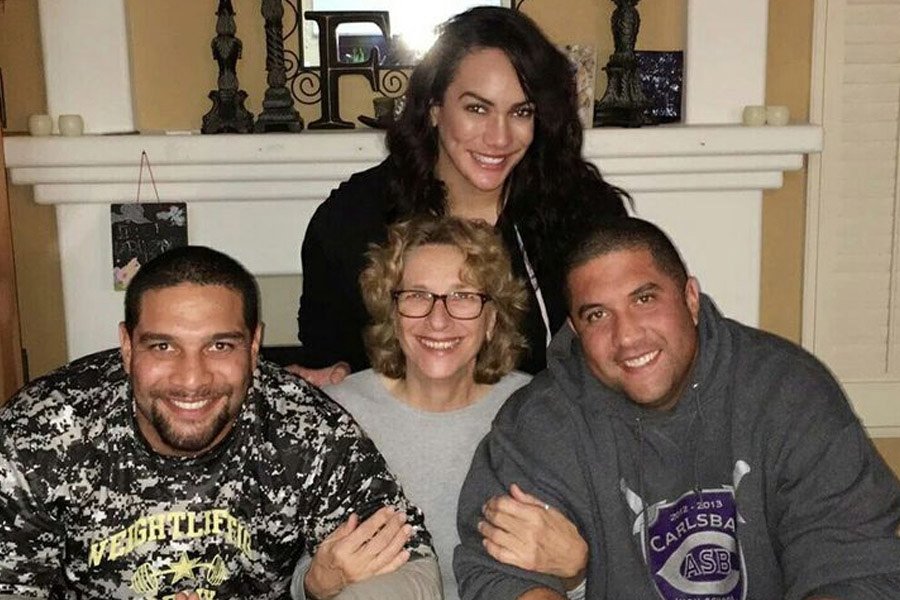
When I look at the image of a family album, certain photographs become small islands of certainty. A hand on a shoulder. A smile turned toward a child. Those details are not neutral. They are the proof of care, of networks stitched together over time. Joseph Fanene shows up there, repeatedly. He is both a literal father and a kind of cultural ledger, an index of relationships that reporters and fans use to make sense of a larger Samoan wrestling tapestry.
Family as living archive
Families are not only genealogies. They are repositories of habits, jokes, and rituals. In the case of the Fanene household, the archive lives in social posts, in captions, in holiday snapshots. These things are ephemeral, yet they function as evidence. They tell us where people have been, who they stand beside, and which names endure.
I think of family photos like pressed flowers. You flatten a moment to preserve it, and the color changes. That is not a flaw. It is the nature of memory. Joseph Fanene appears in these flattened moments, and through them we see influence rather than resume. Influence is harder to quantify. It travels through kinship, through introductions, through the simple fact of presence at milestone events.
The Anoa i echo and cultural gravity
There is a gravitational field around certain names in wrestling. The Anoa i lineage has become a shorthand for a certain legacy. When Joseph Fanene is named in the same breath as that lineage, the name does a lot of work. It signals belonging. It signals cultural continuity. It also opens a door to mythmaking.
I refuse to treat myth as mere fiction. Myths are compressed histories. They tell us what a community values. The repeated association of Joseph Fanene with broader Samoan wrestling dynasties functions like an emblem. It makes a claim about identity that can be embraced by fans and misunderstood by outsiders. That dual capacity for reverence and misinterpretation is part of the story, and it is part of why figures like Joseph matter even if they never step into a ring.
Public records and the fog of names
Anyone who studies families quickly learns caution. Names repeat across places and generations. Joseph Fanene is not a unique string of letters in public databases. There are multiple entries, some similar, some not. That is an archival hazard. It forces a different kind of discipline: one of cross-checking, of matching faces to places and dates, of refusing the easy leap from a typed record to a life lived.
I have spent hours untangling the tangle. A name on a public record can be an anchor. It can also be a mirage. Family photographs, contemporaneous posts, and corroborating details are the anchors I trust more than a single registry entry. The more I look, the more I appreciate how often identity in the public sphere is built from many small, converging traces rather than from one definitive document.
The social currency of quiet influence
There is an economy inside families that is invisible to financial disclosure forms. I call it social currency. It is built from ties, from introductions, from the reputational goodwill one generation passes to the next. Joseph Fanene operates, in the public imagination, as a node in that network. His value is not measured in contracts or titles. It is measured in presence, lineage, and the stories that travel through him.
I like the metaphor of a loom. The more threads a person connects, the more central they are in the pattern. You can sell a loom. You cannot sell the habit of weaving into a community over generations. That habit, that quiet labor, is often what remains when spotlights fade.
Photography as evidence and ritual
Photographs are both proof and performance. Family members perform affection for the camera. They also confide in it. That dual purpose is especially clear when the family is part of a public-facing tradition, such as wrestling. Images of Joseph Fanene with his children are not only personal. They are also cultural offerings, distributed through social networks, acted upon by fans who interpret them in light of celebrity.
I am fascinated by how a single image can be read in multiple keys. Some viewers see only the celebrity it supports. Others read the family dynamics beneath the surface. I fall into the second camp. When I study those frames I try to listen to the silences as much as the captions.
Ethical shadows in researching private people
Historically, journalists and fans have hungry appetites for connective tissue. They want family charts and scandal. I do not. I want context and respect. Researching living families requires an ethical frame. It requires an awareness that public attention can alter private life. Joseph Fanene appears in public materials largely by virtue of his relationships. That fact invites curiosity, but it also calls for restraint.
I believe in naming what is visible and in acknowledging what is not. Where records are sparse, I will say so. Where accounts diverge, I will point that out. That is intellectual honesty. That is also a form of respect.
FAQ
Who is Joseph Fanene?
Joseph Fanene is best known publicly as a family patriarch connected to a Samoan wrestling lineage. He appears primarily in family photographs and biographical notes related to his children. His public presence is relational rather than occupational.
Are there documented career achievements for Joseph Fanene?
Public, independently verified records of a professional wrestling or entertainment career for Joseph Fanene are limited. Most public mentions frame him in terms of family and kinship rather than as a separately documented performer.
Is Joseph Fanene connected to the Anoa i family?
Public profiles and repeated biographical notes often associate Joseph Fanene and his family with the broader Samoan wrestling network that includes the Anoa i lineage. This association functions as cultural context as much as genealogical fact.
Can public records be trusted to identify Joseph Fanene precisely?
Names repeat across public records. There are multiple individuals with similar or identical names, which creates ambiguity. To reliably identify a specific person you need corroborating evidence such as dated photos, contextual family details, or matching location information.
What does Joseph Fanene represent beyond the factual record?
He represents the quiet structures that hold fame in place. He is the backstage hand of a family narrative, the steady presence in a series of domestic snapshots. In that sense he is part of the scaffolding that allows public figures to stand tall.